


Archaeologists near Chesapeake Beach have uncovered a 17th-century archaeological site, offering a rare glimpse into colonial Maryland’s early history. The discovery, made during a weeklong dig in April, includes brick fragments, tobacco pipe stems, and soil discolorations suggesting human activity between 1660 and 1715. The site’s uniqueness lies in its short period of occupation, which provides a focused snapshot of life during the era.
“This is a rare opportunity to examine a slice of time without the clutter of later periods,” said Christopher Sperling, historic planner for the Department of Planning & Zoning. “It’s exciting for those who seek to know more about the early colonial history of Calvert County.”
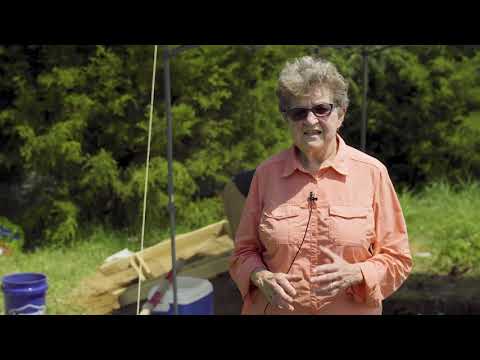
The excavation was funded through a Certified Local Government project grant from the National Park Service, administered by the Maryland Historical Trust. Applied Archaeology and History Associates, Inc. conducted the dig, following procurement procedures. A short documentary about the site is available at Calvert County’s website.
A Mystery Beneath the Surface
The discovery began when fossil hunters stumbled upon artifacts and reported them to authorities. Unlike other historic sites in the region, no maps or documentation reference this site, deepening its mystery.
“The wonder of archaeology is the mystery,” said Sperling. “We’re reconstructing a puzzle without knowing how many pieces there are or what the final picture should look like.”
The exact location remains confidential to preserve the site’s integrity. Archaeologists urge the public to leave potential artifacts undisturbed and report findings to local authorities. “Taking objects can damage the context that helps piece together the broader story,” Sperling noted.
Coastal Erosion Threatens Historical Treasures
This discovery underscores the urgency of preserving historical sites as coastal erosion threatens vulnerable locations along the Chesapeake Bay. Calvert County’s coastal areas, rich in fossils and human history, face significant risks. Preservation efforts, like the excavation at Calverton—a 17th-century town built on an earlier Native American settlement—play a vital role in documenting the region’s past before it is lost to erosion.
“Archaeological projects help us understand how early settlers adapted to life in the Chesapeake region,” Sperling explained. These studies also explore the complex histories of Native Americans, European settlers, and African Americans—both free and enslaved—who shaped the region.
Broader Preservation Initiatives
Calvert County has undertaken other preservation projects to highlight diverse histories, including a database of African American soldiers from the United States Colored Troops during the Civil War. This initiative, a collaboration between the Department of Planning & Zoning and the Calvert Historical Society, seeks to give voice to underrepresented stories.
“History helps us understand who we are today,” said Mary Beth Cook, director of Planning & Zoning. “These projects offer a voice to people whose stories haven’t been written down. They inspire us to become better stewards of our community for future generations.”
Residents interested in historic preservation can learn more by visiting Calvert County’s Historic Preservation page.
